Sep 24, 2026Company Updates
How to Build a Private Label Ceramic Tableware Collection
Learn how to build a private label ceramic tableware collection by defining the market, approving samples, planning production, quality control and packaging.
A private label ceramic tableware collection works best when the market, product mix, design priorities and production standard are defined before sampling. The practical route is to build a coherent range, test real ceramic surfaces, approve physical samples and connect the product with packaging and quality control.
Define the Market and the Opening Product Mix
Hospitality projects may prioritise durability and stacking. Lifestyle stores may value color consistency and shelf impact, while online brands also need compact, protective packaging. Define the target customer, price position and use first, then choose the core items that tell the collection story without unnecessary SKUs.
Make the Design Manufacturable
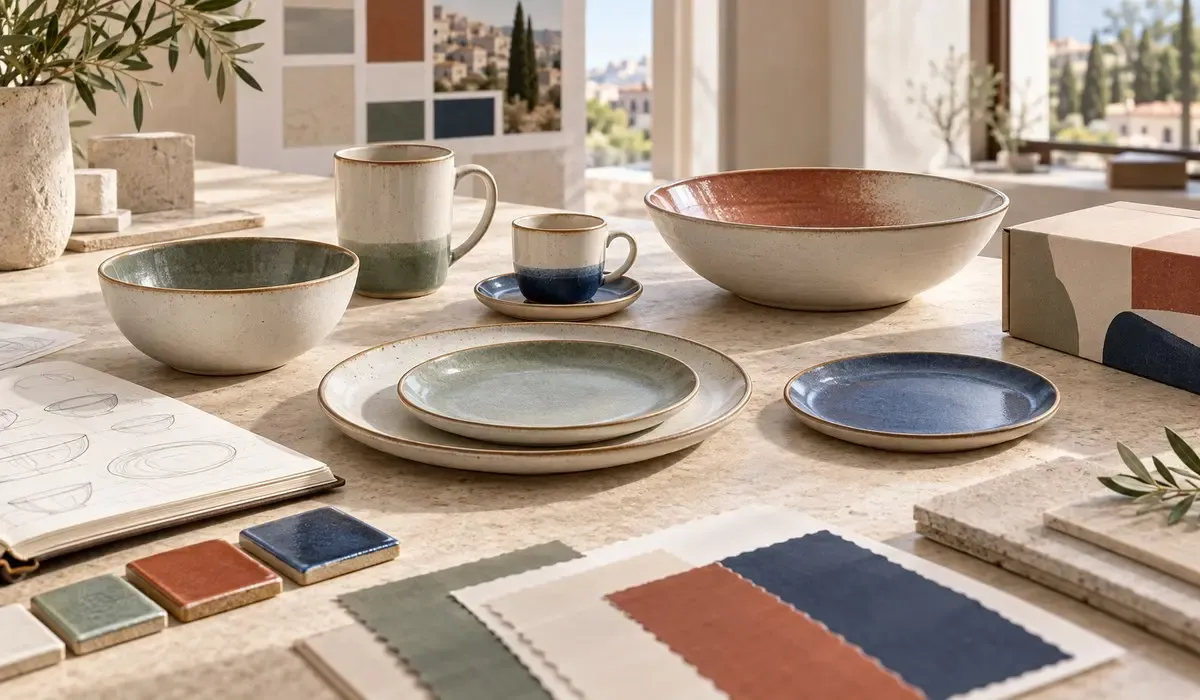
A design that looks right on screen may change after firing. Body colour, glaze, decoration, curves and firing conditions all affect the result. Confirm the material, shapes, glaze direction, artwork and logo method before repeated samples. Fired glaze tiles and decoration tests are more useful than digital colour alone. For custom shapes, review mould construction, wall thickness and function early.
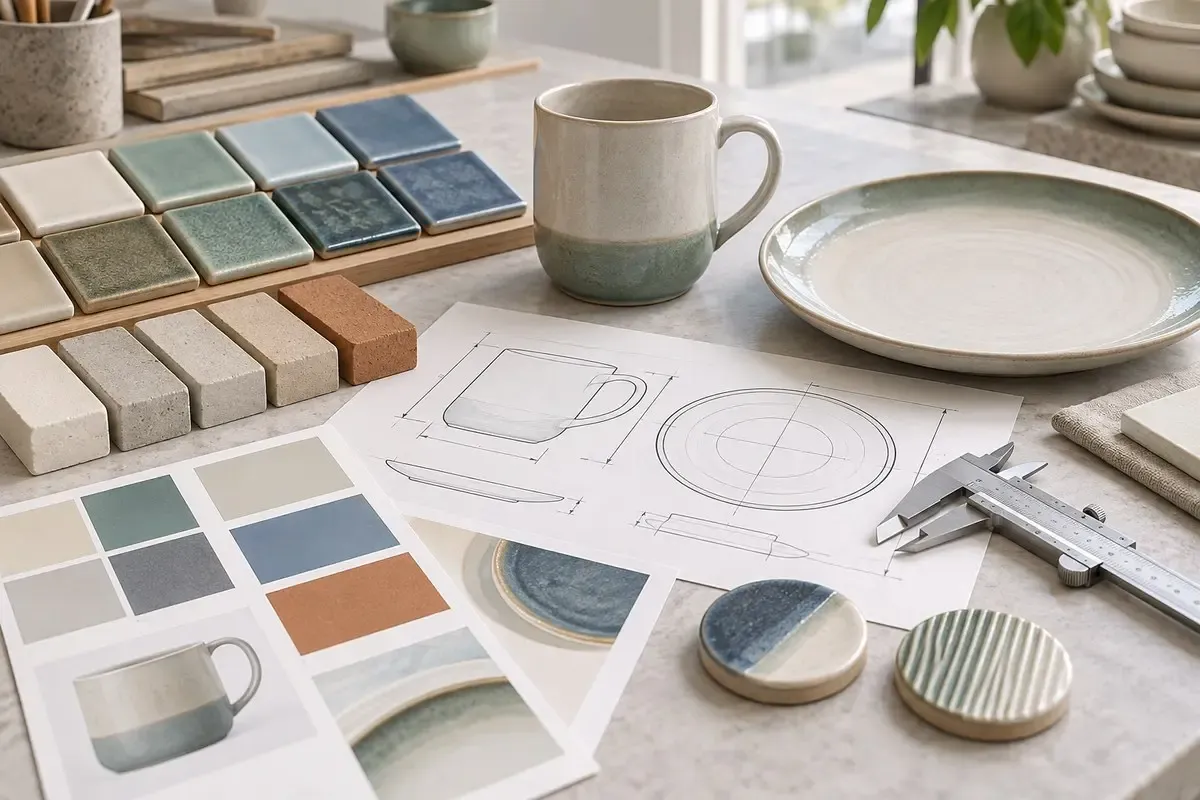
Fired samples and production tests show whether a design can move reliably from a screen to real ceramic surfaces.
Approve a Physical Sample Before Bulk Production
The approved sample should become the production reference. Check dimensions, capacity, weight, rim and base finish, handle comfort, stacking, glaze tone, artwork, logo and packaging fit. Record these points and define acceptable handmade or reactive-glaze variation. Start bulk production only after buyer and supplier share the same standard.
Plan the Order Around Production Reality
Quantity by SKU, custom moulds, exclusive glazes, decals and gift boxes can create separate minimums and affect timing. Group compatible materials, shapes, firing routes and packaging where possible. Ask the supplier to identify technical risks and confirm milestones before fixing the launch date.
Connect Quality Control With Packaging
Quality control should follow the approved sample. At Willcan, the first batch is checked at the kiln tail, finished products receive daily full inspection in the QC department, and random checks are completed during packing. Packaging is part of the product because inserts, box fit and cartons influence breakage and shipment efficiency. Confirm target-market food-contact, labelling and testing requirements before ordering.
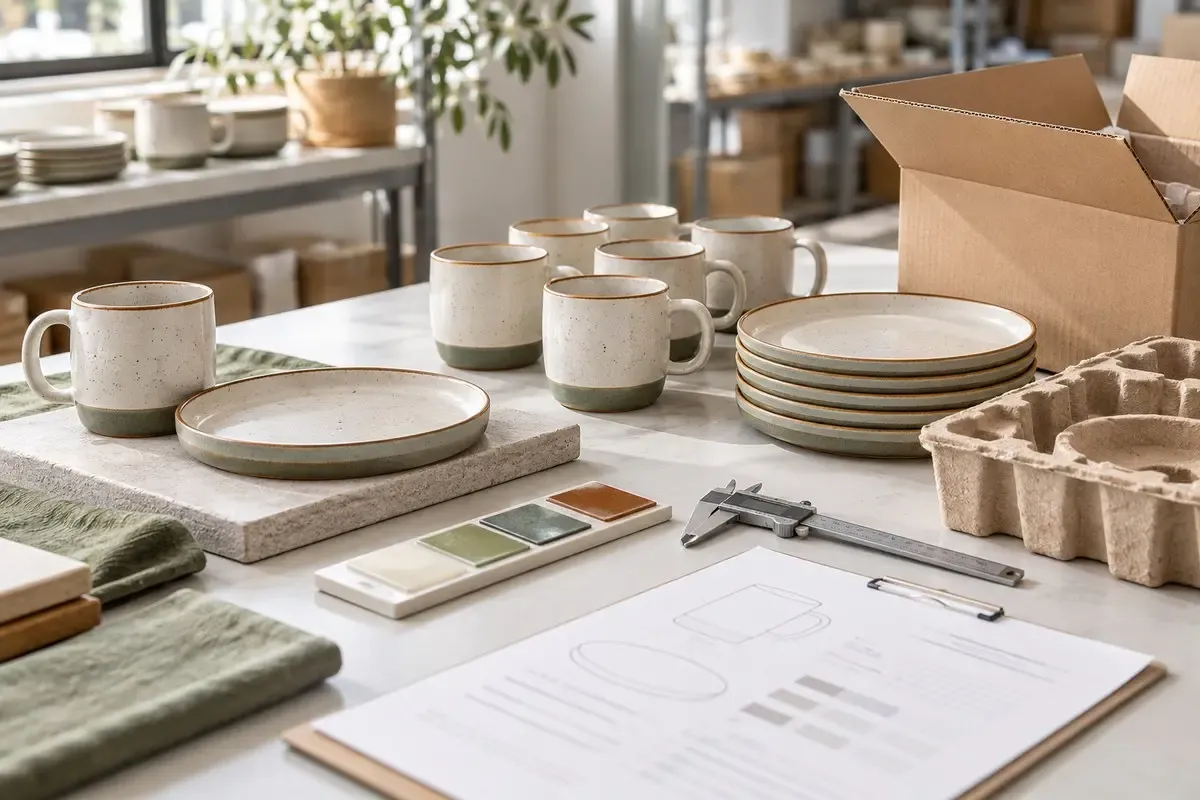
The approved physical sample, written specification and packaging structure should remain connected throughout bulk production.
What Information Should Buyers Send
Provide the target market, sales channel, products, quantity by SKU, material, glaze, artwork, logo method, packaging, compliance needs and launch timing. This allows Willcan to recommend an OEM, ODM or hybrid route.
Frequently Asked Questions
- Can an Existing Shape Still Look Private Label
Yes. Original artwork, colour placement, glaze, embossing, logo and packaging can create a distinctive collection without a new mould.
- Should Every SKU Be Developed at Once
Not necessarily. A focused opening range can establish the design language, then add coordinated shapes or colours after the core products are approved.
- What Is the Most Important Approval Point
The physical sample and written specification together. They provide a shared reference for production, inspection and repeat orders.
Build a Collection Your Brand Can Grow
Share your concept, target products and expected quantities with Willcan. We can help organise the design, sampling, production standard and packaging into a practical private label ceramic collection.