Sep 21, 2026Company Updates
How to Check Ceramic Tableware Quality Before a Bulk Order
Learn how to check ceramic tableware quality before bulk production, from approved samples and in-process inspection to glaze variation and packaging.

A good sample is only the starting point. Before bulk production, buyers need an approved standard, clear tolerances, defined inspection stages and packaging requirements. The aim is not to make every ceramic piece look mechanically identical. It is to ensure the order stays within an agreed range for shape, color, finish, function and presentation.
Start With One Approved Production Standard
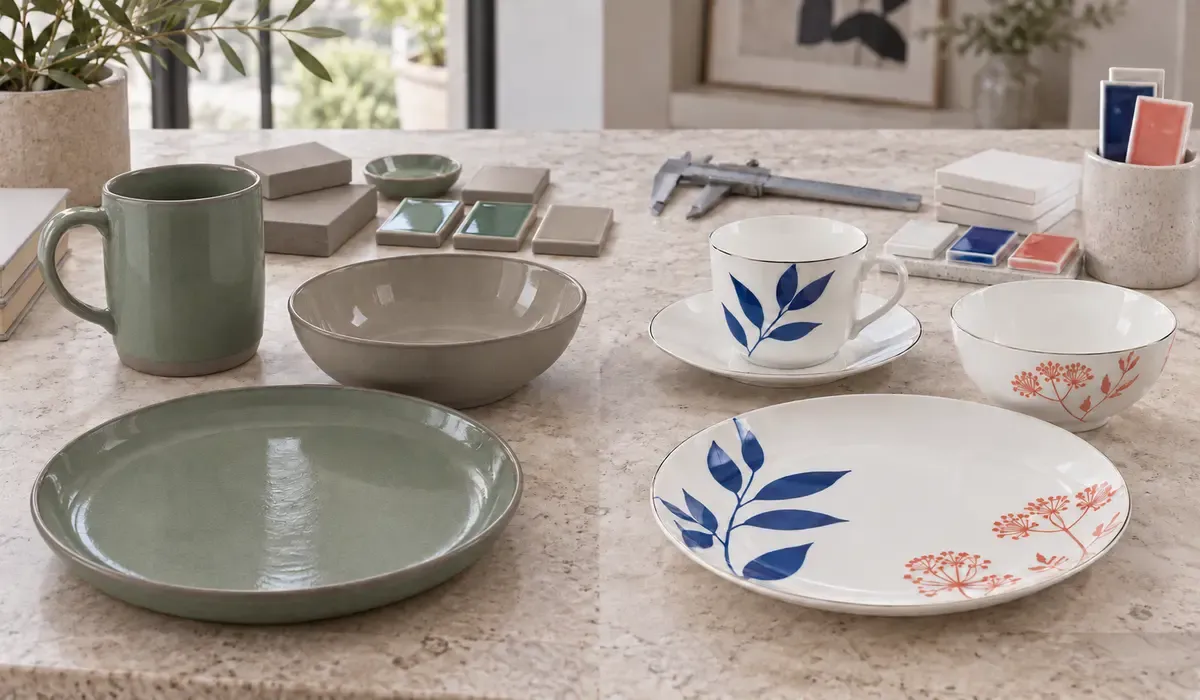
The final sample should become the reference for bulk production. Record the product shape, capacity, dimensions, weight range, ceramic body, glaze, colour, decoration position, logo, rim and base finish, and packaging method. If any detail changes after approval, the specification and quotation should be reviewed before production begins.
Photos help communication, but physical samples and a written specification provide a stronger production reference. Both buyer and supplier should understand which details are fixed and which have an acceptable tolerance.
Check Quality at Three Production Stages
1. First-batch kiln-tail inspection.
At Willcan, the first production batch is checked at the kiln tail. This early review compares shape, firing result, glaze surface, colour and decoration with the approved standard before the order moves further.
2. Daily full inspection.
Finished products are inspected in the QC department each day. The team checks dimensions and appearance, then removes pieces with cracks, chips, deformation, pinholes, glaze faults, decoration errors or unsuitable rim and base finishing.
3. Random checks during packing.
The packing workshop performs random checks before cartons are closed. This confirms the correct products, quantities, colour or artwork assortment, labels, inner protection and outer-carton information.
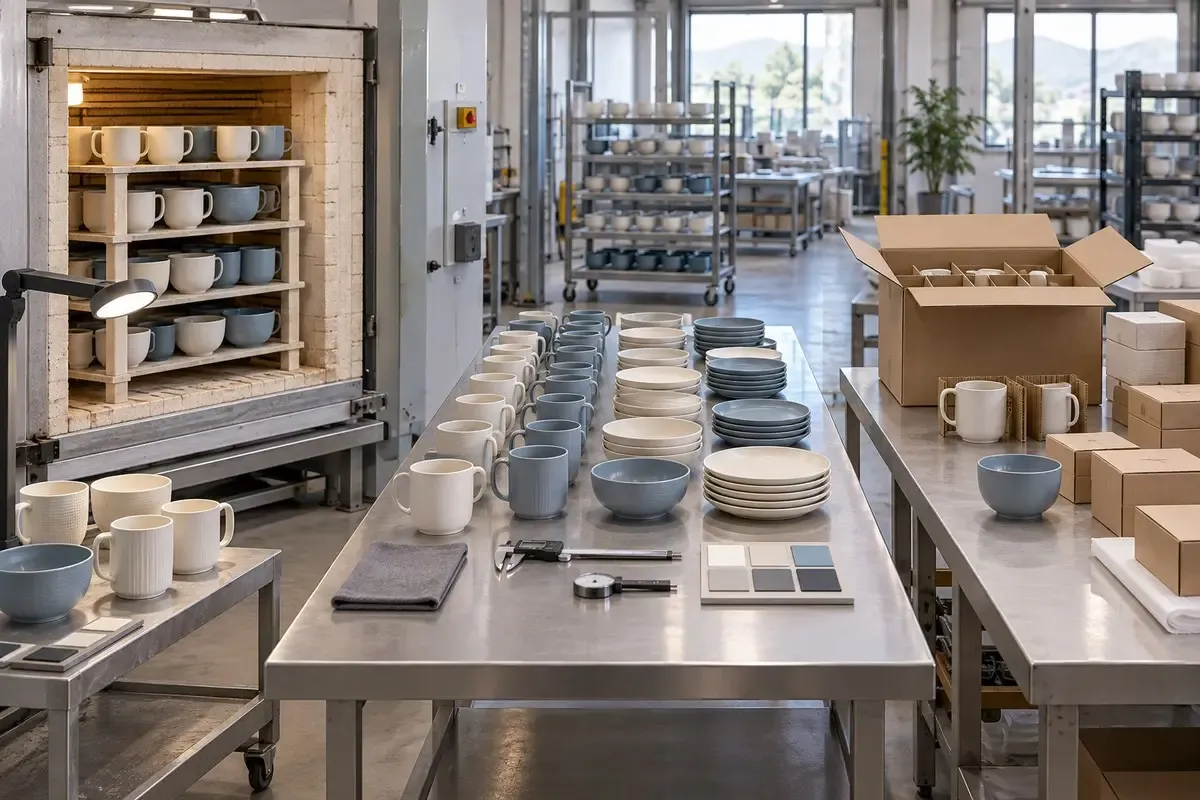
Willcan connects first-batch inspection, daily full inspection and packing-stage random checks.
Agree on Acceptable Variation Before Production
Reactive glaze, hand painting and hand-brushed decoration naturally show some variation. A bulk order should follow an approved range rather than one perfectly identical surface. Reference pieces can define acceptable colour depth, glaze flow, brush character and pattern placement.
Natural variation does not include cracks, chips, unsafe sharp points or functional defects. Separating acceptable craft variation from unacceptable defects prevents disputes after production.

Natural variation should stay inside an approved visual range while shape and function remain consistent.
Packaging Is Part of Product Quality
Ceramic products face impact, vibration and stacking pressure during transport. The product and package should therefore be evaluated together. Check the fit of the box, dividers or inserts, movement inside the package, gift-box appearance, assortment accuracy and export-carton information before bulk packing.
What Buyers Should Confirm Before Production
Before giving final approval, confirm the master sample and specification, measurable tolerances, acceptable surface variation, inspection checkpoints, packing method, labels and carton marks. For special finishes, ask for production photos or reference pieces that show the agreed range.
How Willcan Supports Bulk Quality Control
Willcan connects the approved sample with production and packing control. We check the first kiln output, carry out daily full inspection in the QC department and complete random checks in the packing workshop. Clear standards established before production help us manage variation without weakening the intended design.
For the wider development process, read OEM ODM Ceramic Product Development. For colour and surface control, see Custom Ceramic Glaze Development and Color Matching
Frequently Asked Questions
- Will a Bulk Order Look Exactly Like the Sample
It should match the approved specifications and tolerance range. Small differences may remain in reactive glaze or handmade decoration, but the range should be agreed before production.
- What Ceramic Defects Should Buyers Check
Check shape and dimensions, colour, glaze, decoration, cracks, chips, pinholes, deformation, rim and base finishing, assortment and packaging.
When Should Packaging Be Approved
Approve the packaging structure and graphics before bulk packing, ideally together with the final product sample.
Set the Quality Standard Before Bulk Production
Share your product, finish, quantity and packaging requirements with Willcan. We will help turn the approved sample into a clear production and inspection standard.