Oct 2, 2026Company Updates
What Should Be Included in a Ceramic Tableware Supplier Quotation?
A practical checklist for checking whether a ceramic tableware supplier quotation is complete, comparable and clear about product scope, MOQ, extra costs, packaging and commercial terms.
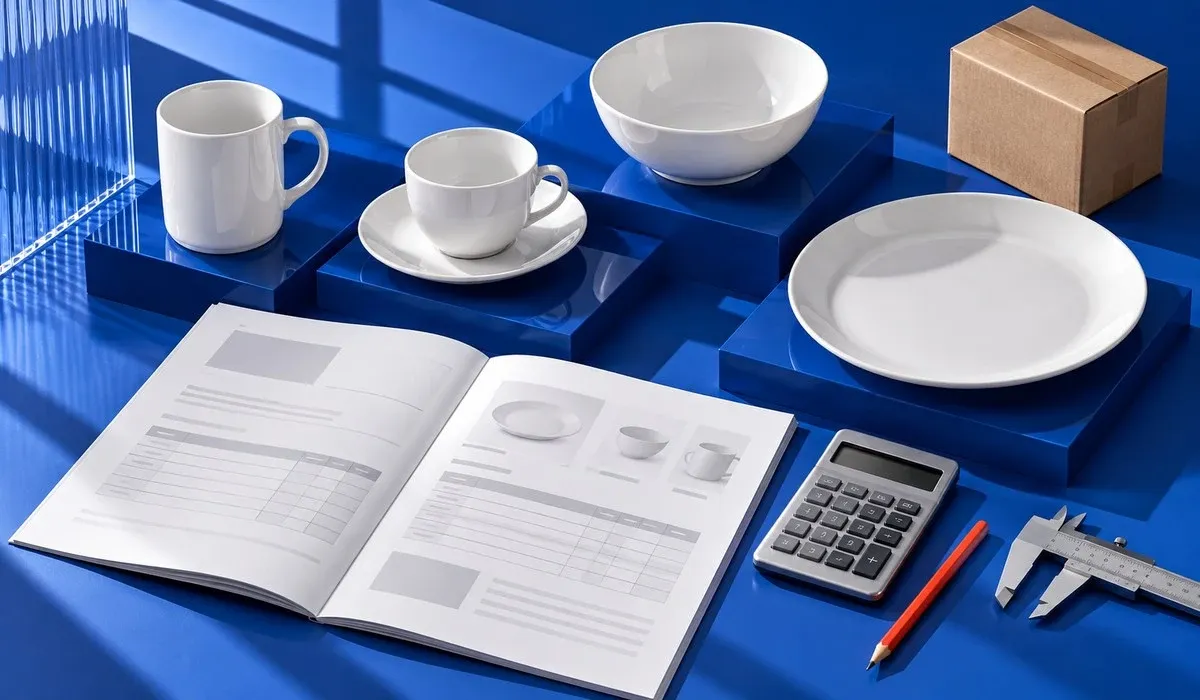
A useful ceramic tableware supplier quotation should make every price comparable. At minimum, it needs exact product specifications, quantity by SKU, price basis, MOQ, separate development costs, packaging data, lead time, payment terms and quotation validity. A low unit price is not meaningful if moulds, decoration setup, gift boxes, testing or the delivery basis are missing.
Start With the Exact Product and Quantity
Each SKU should have an item code or image, ceramic material, dimensions or capacity, glaze, decoration, logo method, packing and quantity. Show quantity per SKU and the total order. One SKU of 5,000 and ten SKUs of 500 do not create the same production conditions. If specifications are incomplete, mark the price as preliminary.
Define What the Unit Price Includes
The price needs a currency, Incoterm and named location—for example, EXW at a named factory or FOB at a named port. It should also show what is included and excluded. When applicable, moulds, samples, print setup, testing and special packaging should appear as separate lines, preventing later surprises.
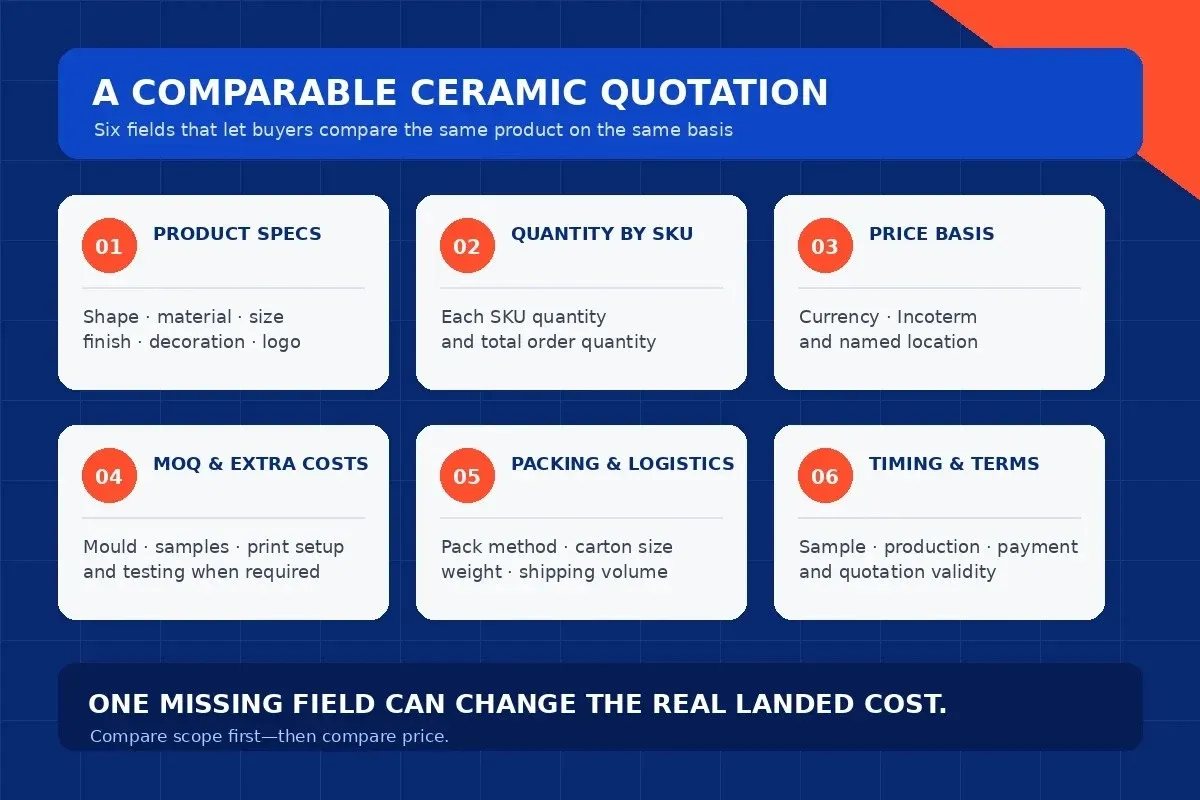
A comparable quotation connects the product, quantity, price basis, extra costs, logistics data and commercial terms.
Check MOQ at SKU and Process Level
MOQ should match the quoted product plan. Existing shapes and established finishes may be more flexible, while a new mould, exclusive glaze, separate decoration or custom gift box can create its own minimum. A large total order does not remove every SKU-level minimum. Show one-time tooling or setup costs separately.
Include Packaging and Shipping Data
A complete quotation should identify the packing method, pieces per inner box and master carton, protection, carton dimensions, net and gross weight, and estimated shipping volume. These details help buyers compare landed cost, not only factory price. If figures remain provisional until a fitted pack is tested, label them clearly. For more detail, read Custom Ceramic Packaging: Boxes, Protection and MOQ.
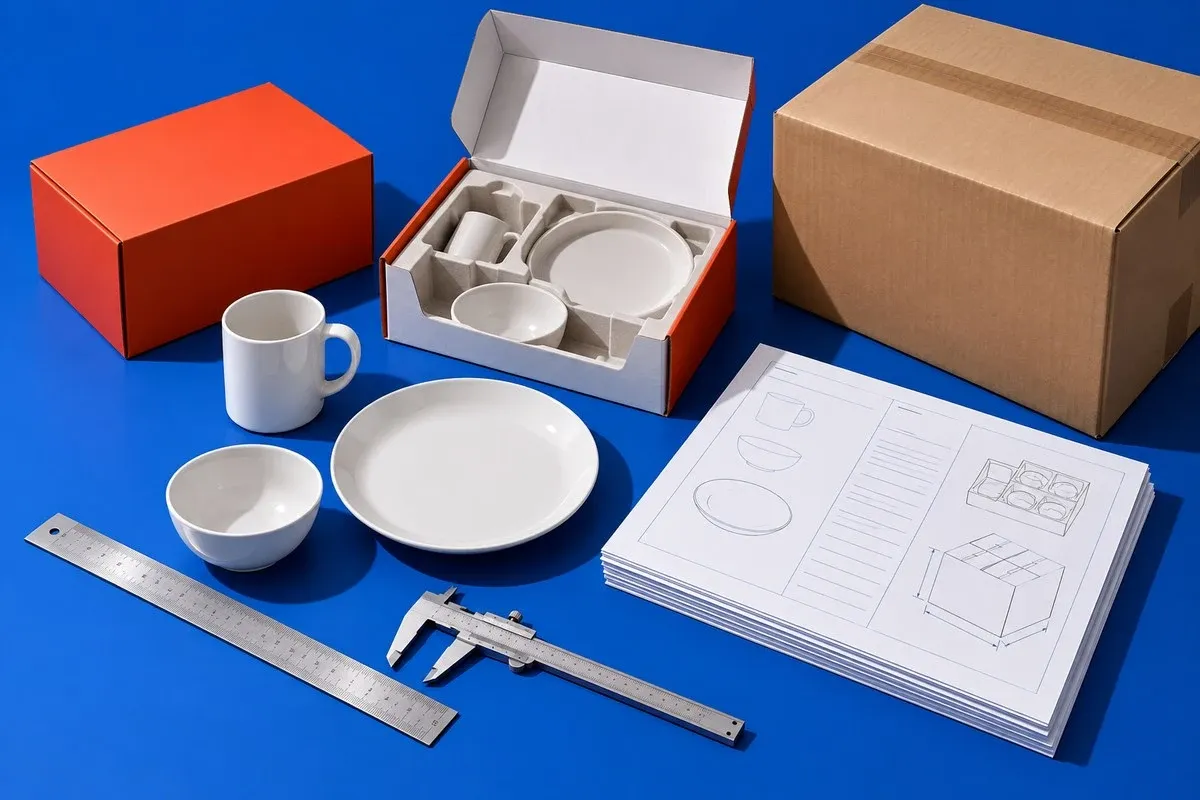
Packaging structure, carton measurements and shipping volume are part of the commercial comparison—not an afterthought.
Confirm Timing, Payment and Validity
State sample timing, the basis of the production lead time, payment terms and quotation validity. Production timing normally depends on final sample approval, confirmed specifications, deposit and scheduling. Define any inspection, compliance testing or special labels before approving the final quotation.
How Willcan Builds a Practical Quotation
Willcan reviews the brief by SKU, then connects product specification, process, MOQ, packaging and timing in one quotation basis. Compatible items can be grouped where production allows; custom moulds, glazes or packaging are assessed separately. When the approved sample, quantity or packing method changes, the quotation is updated before order confirmation. To prepare a clearer inquiry, see How to Get an Accurate Ceramic MOQ and Quotation.
Frequently Asked Questions
- Is the Cheapest Unit Price Always the Lowest Total Cost?
No. Missing tooling, packaging, testing or delivery-basis information can change the real cost after sampling or order confirmation.
- Should Freight Be Included?
Not always. The quote should clearly state its Incoterm and named location. If freight is separate, carton and shipping-volume data should be available for comparison.
- Can Several SKUs Share One Price?
Only when the product and process basis is genuinely the same. A clearer quotation normally prices each SKU or compatible production group separately.
Request a Quotation You Can Compare
Send Willcan your product references, specifications, quantity by SKU, packaging needs and target timing. We will organise the quotation around the details that affect production and total cost.